

Aging motorway infrastructure is becoming one of the biggest challenges for transport operators across Europe. Increasing traffic loads, material degradation and stricter safety requirements are pushing infrastructure managers to adopt smarter and more reliable monitoring solutions.
This is exactly the context in which CAEmate and Milano Serravalle – Milano Tangenziali collaborated on an advanced Structural Health Monitoring (SHM) project focused on one of Milan’s most strategic infrastructures: the Viadotto dei Parchi.
The project
The project was led by Giuseppe Colombo, Technical Director, at that time, responsible for the technical supervision of the concessioned infrastructure, including the A7 Milan–Genoa motorway and the Milan ring roads.
The Challenge of Monitoring the Parchi Viaduct
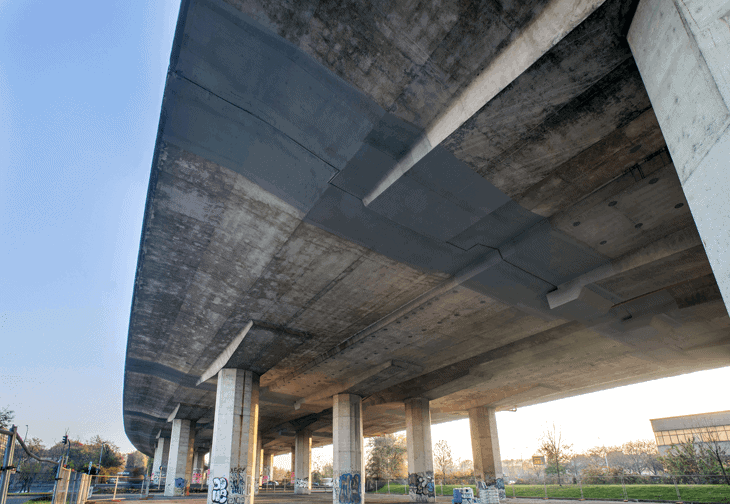
The Viadotto dei Parchi, located on Milan’s eastern ring road, is one of the most important structures within the Milano Serravalle motorway network.
Originally designed in the 1970s by engineer Silvano Zorzi, the viaduct is a nearly 3-kilometer-long prestressed concrete structure composed of two parallel carriageways. In the 1990s, the deck was widened to support increasing traffic volumes, adding further structural complexity.
Like many historic motorway structures, the viaduct is exposed to:
- concrete aging,
- environmental degradation,
- increasing traffic loads,
- and difficult inspection conditions.
Traditional inspection methods provided only periodic and qualitative assessments, making it difficult to continuously evaluate the real structural behavior and safety margins of the infrastructure.
For Milano Serravalle, this created the need for a more advanced and data-driven monitoring approach.
Why Milano Serravalle Chose CAEmate
In 2023, Milano Serravalle launched an infrastructure monitoring initiative supported by European funding and started collaborating with CAEmate.
The goal was not simply to collect sensor data, but to create an intelligent system capable of interpreting structural behavior in real time.
One of the main challenges was the incomplete availability of original construction documentation and the potential presence of hidden structural imperfections accumulated over decades of operation.
CAEmate’s approach stood out because it combines:
- AI-driven reverse engineering,
- digital twin technology,
- real-time monitoring,
- and predictive structural analysis.
This made it possible to generate a highly accurate digital representation of the infrastructure capable of continuously updating itself using real monitoring data.
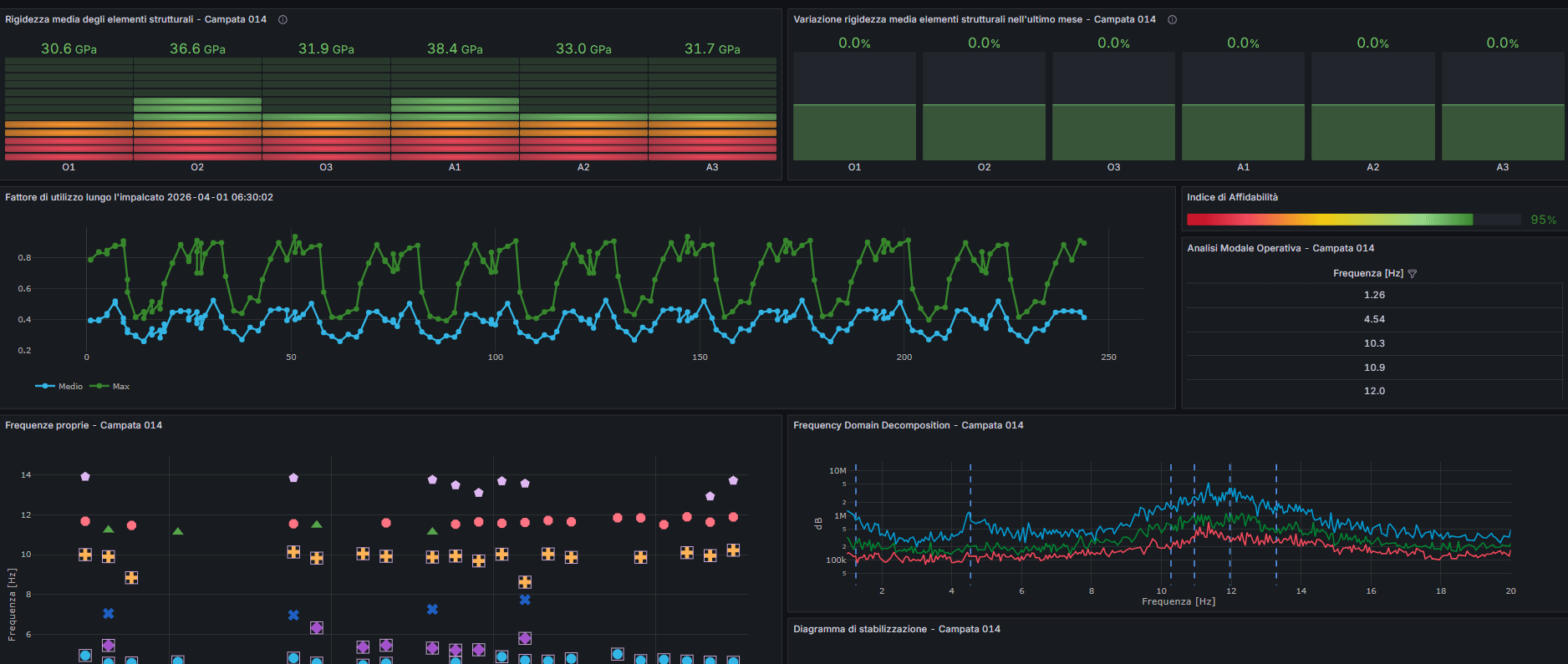
Implementing WeStatiX SHM
To support this transformation, Milano Serravalle deployed WeStatiX SHM by CAEmate across its most critical infrastructures.
The Structural Health Monitoring system includes:
- fiber optic sensors,
- accelerometers,
- inclinometers,
- and continuous acquisition of static and dynamic structural data.
The platform was installed across approximately 340 spans within the motorway network and continuously compares real structural behavior with the predictions generated by the digital twin.
This enables engineers to:
- monitor infrastructure conditions in real time,
- improve structural safety assessments,
- reduce uncertainty in maintenance decisions,
- and optimize inspection activities.
From Periodic Inspections to Predictive Infrastructure Management
The implementation of the SHM platform transformed the engineering workflow from periodic inspection-based assessments to continuous structural monitoring.
According to Giuseppe Colombo, Technical Director of Milano Serravalle – Milano Tangenziali, the system provides a much clearer understanding of how structures respond to operational loads over time.
The monitoring platform also improves:
- decision-making speed,
- objectivity in defect evaluation,
- and maintenance planning efficiency.
Additionally, remote monitoring supports a reduction in visual inspection frequency, generating significant operational and economic benefits.
Validating the Digital Twin of the Parchi Viaduct
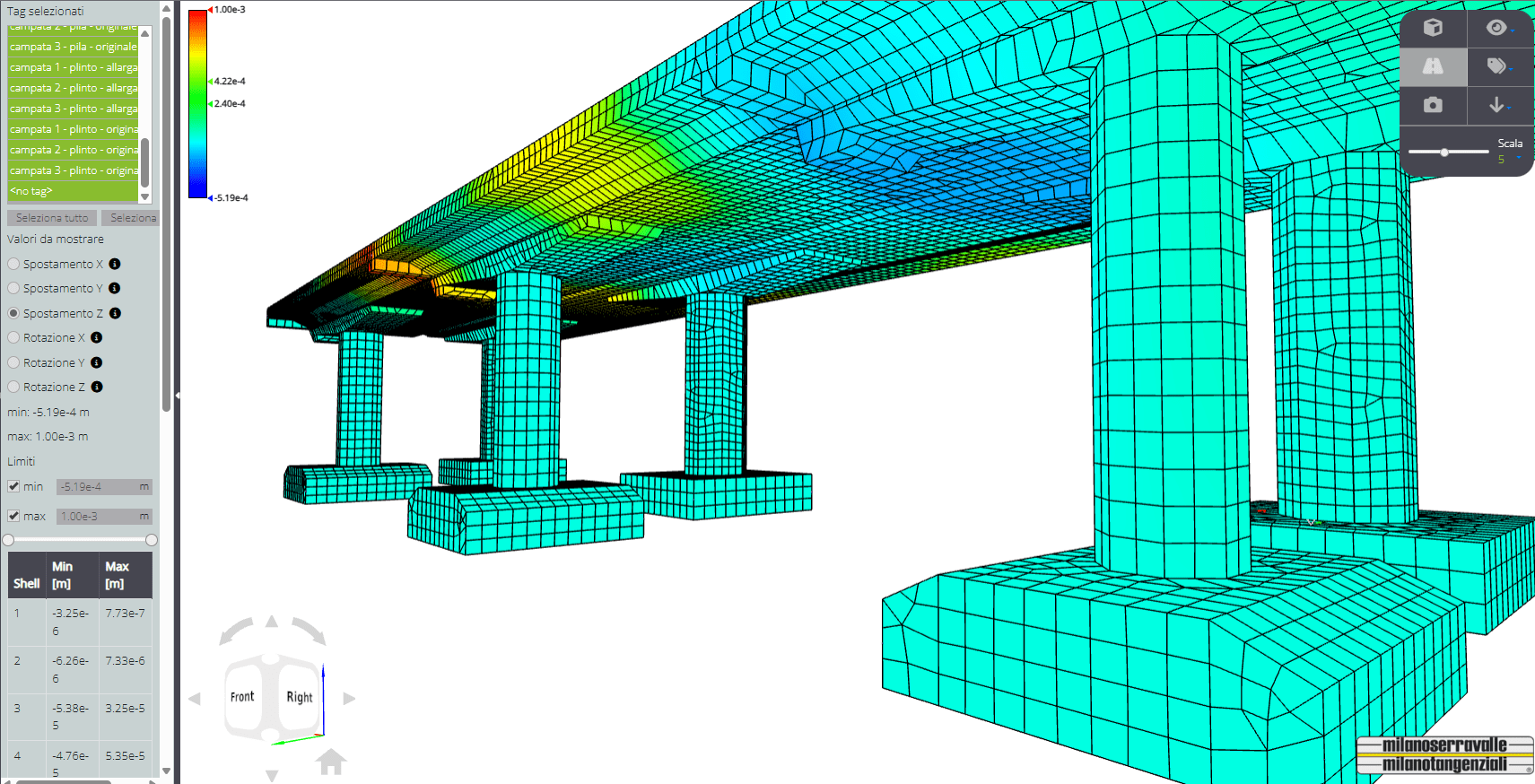
To validate the reliability of the digital twin, several spans of the Viadotto dei Parchi underwent static load testing using six fully loaded trucks weighing approximately 30–32 tons each.
The same loading conditions were simulated within the digital twin environment using detailed structural and load distribution models.
The comparison between measured and simulated displacements showed discrepancies below 5%, confirming the high accuracy of the model and its ability to replicate the real behavior of the structure.
A New Approach to Structural Health Monitoring
The experience of Milano Serravalle demonstrates how digital twin technology and advanced Structural Health Monitoring systems can support safer, more efficient and more predictive infrastructure management.
By integrating real-time sensor data with AI-driven structural models, operators can:
- improve infrastructure safety,
- optimize maintenance costs,
- reduce operational uncertainty,
- and extend the life cycle of critical assets.
As transport infrastructure continues to age, solutions like WeStatiX SHM by CAEmate are becoming essential tools for the future of bridge and viaduct monitoring.